1
How much for a diploma: In search of a democratic education
Though the higher education sector in Albania is currently booming, the quality of education has fallen considerably in comparison to the period of the communist regime. With a doubling in the number of private universities in the past two years, nearly half of them remaining unaccredited, the quality of education provided and even the motivation behind their establishment has been questioned. Indeed, it has been noted that instead of providing a competitive education, the majority of private universities merely seek financial profit. Often, students are able to pass a class by paying a bribe; and individuals may even buy a university degree in their field of choice. Consequently, the value of higher education in Albania is being degraded at an alarming rate.
Yet, the issue has implications beyond individual losses and a less competitive labor market. By supporting questionable education institutions, students and their families are unwittingly encouraging the continuation of corruption and lack of transparency at the administrative level which has allowed the private university system to become what it has. The reciprocal cycle of corruption, with weak political structures undermining the once-dynamic university system, and the latter returning the favor is perpetuated. As such, though education may not be considered an obvious piece of the democratic puzzle, the current practices in Albania show that even the educational sector—and its current failures-- has great implications for the democratic progress of Albania.
In light of this, AESA has undertaken an intensive project-- combining an active approach with research and consultations with domestic and international educational experts-- with the aim of:
1) Fostering constructive debate and reform regarding Albania’s weak institutions as evidenced by the deterioration of the higher education system.
2) Creating an anti-corruption campaign which will aim to raise awareness and advocate for pressure from the societal level for reform.
3) Targeting and facilitating collaboration among academia, students, politicians, legal experts, educational advisors from abroad and civil society.
It is important that recognition be given to the fact that the health of the education system is an indispensable part of not only the future success of Albanian youth, but the progress and stability of the Albania’s democracy itself.
Supported by the U.S. Embassy Tirana
Have a say in this project!
2
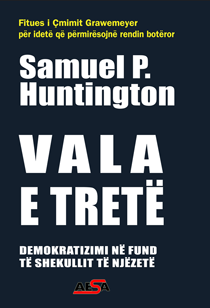
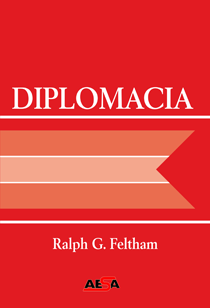
Translation of academic texts
With the support of the U.S. Embassy Tirana, AESA has recently begun an academic project which foresees the translation of various scholarly texts into the Albanian language. These materials will serve to expand the academic world available to those studying in Albanian by enriching the resources available to both students and staff of universities throughout Albania.

3
Celebrating 20 years of Albanian-American Relations
In October, AESA commemorated the 20th anniversary of the reopening of the U.S. Embassy Tirana—and consequently Albanian-American relations—with an international conference held at the Sheraton Hotel in Tirana. The conference featured scholars from Albania and the United States, as well as political figures of both countries. Albanian President Bamir Topi and U.S. Ambassador Alexander Arvizu were in attendance and discussed the development of bilateral relations, as well as their hopes for future progress. Other featured speakers included Bernd Fischer, Elez Biberaj, and Nicholas Pano.